
A well-planned electrical installation requires more than selecting the correct conductors and equipment. Contractors must also determine how wiring will be routed, supported, protected, separated, and accessed after the installation is complete.
Wireway and wiring trough provide an effective solution for organizing conductors and protecting wiring systems in commercial, industrial, institutional, and utility applications. CAPO Supply stocks a variety of Hammond Manufacturing wireway and trough products, with a primary focus on Type 1 lay-in wireway for indoor installations and Type 3R wiring trough for outdoor applications.
What Is Electrical Wireway?
Electrical wireway is an enclosed metal pathway used to route and protect electrical conductors. Unlike conduit, which normally requires conductors to be pulled through a relatively narrow raceway, lay-in wireway can be opened along its length so conductors may be placed directly inside.
This design can make wireway particularly useful when an installation contains:
- Multiple conductors traveling along the same route
- Numerous branch circuits or control wires
- Several connection or termination points
- Conductors that may require future inspection or modification
- Complex routing around machinery, panels, or building structures
Wireway can provide a cleaner, more organized installation while helping protect conductors from accidental contact and environmental exposure appropriate to the enclosure rating.
Hammond Type 1 Lay-In Wireway for Indoor Applications
Hammond’s CW Series Type 1 lay-in wireway is designed for indoor installations and for the fast assembly of multiple wireway sections. The system is constructed to maintain electrical continuity while providing an unobstructed interior that simplifies laying conductors into the wireway.
Type 1 wireway is commonly considered for dry indoor environments such as:
- Commercial buildings
- Manufacturing facilities
- Electrical and mechanical rooms
- Warehouses
- Workshops
- Equipment rooms
- Control-panel installations
- Indoor service and distribution areas
Hammond offers Type 1 sections with screw covers or hinged covers. Depending on the selected product, sections are available with or without knockouts. The knockouts can reduce field fabrication when connecting conduit or other raceway systems to the wireway.
The hinged-cover design can be especially helpful where technicians may require regular access for inspection, troubleshooting, or future circuit changes. Screw-cover sections provide a straightforward solution for installations that are not expected to be opened as frequently.
Hammond’s Type 1 system also includes fittings and accessories for constructing a complete wireway route. Available component types include elbows, tee fittings, cross fittings, reducers, closing plates, barriers, adapters, hangers, and joiners.
These components allow installers to route conductors around corners, change direction, transition between wireway sizes, branch into multiple paths, and connect the wireway to electrical enclosures or equipment.
Benefits of Type 1 Lay-In Wireway
For the correct indoor application, Type 1 lay-in wireway offers several practical advantages:
Faster conductor installation:
Because the conductors can be laid into the open wireway, installers may not need to pull long conductor runs through an enclosed raceway.
Accessible wiring:
Removable or hinged covers provide access for inspection, maintenance, circuit additions, and troubleshooting.
Organized routing:
Multiple conductors can be grouped into a defined pathway rather than routed individually across walls or around equipment.
Flexible configurations:
Straight sections and fittings can be combined to accommodate the physical layout of the installation.
Professional appearance:
A properly planned wireway system creates a clean, orderly installation while protecting the wiring contained inside.
Hammond Type 3R Wiring Trough for Outdoor Protection
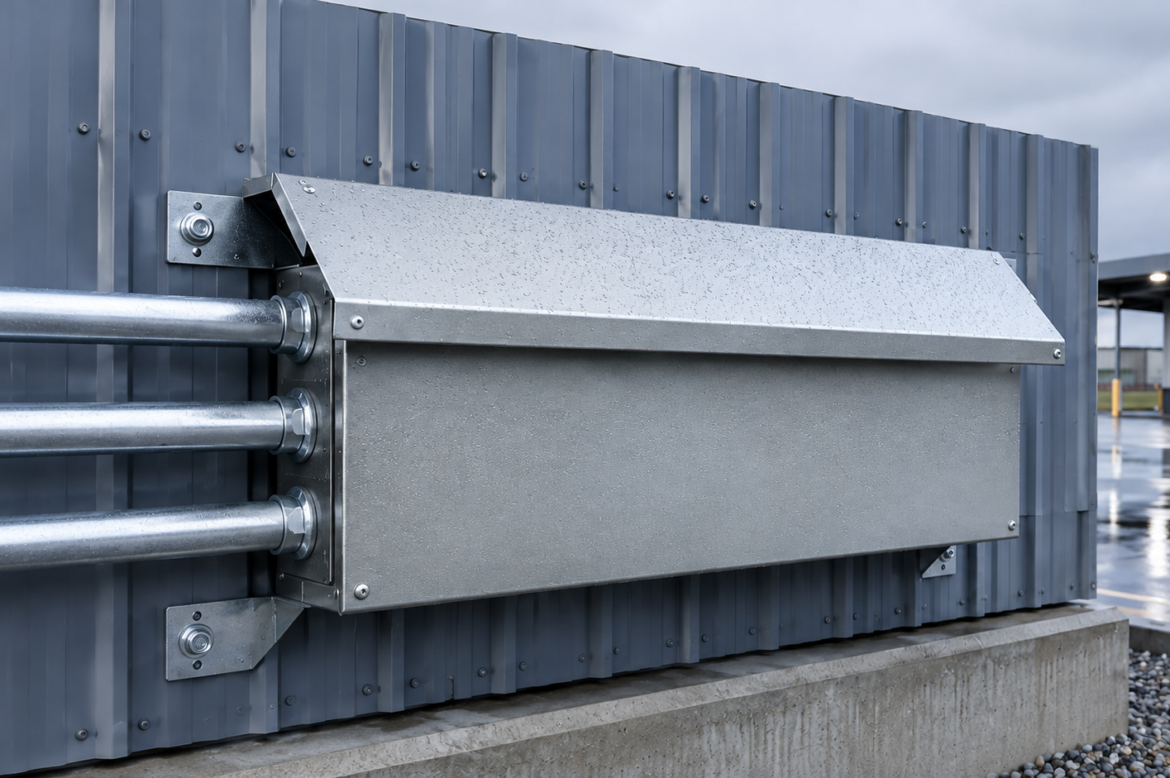
Outdoor electrical installations require an enclosure designed for exposure to weather. Hammond’s C3RWT Series Type 3R wiring trough is intended to protect multiple wiring junctions in outdoor environments against rain, sleet, snow, and the external formation of ice. The product complies with NEMA Type 3R requirements and is listed to UL 870 Type 3R.
Type 3R wiring trough may be used in applications such as:
- Outdoor electrical distribution
- Exterior service equipment
- Utility and metering installations
- Rooftop equipment connections
- Outdoor HVAC systems
- Agricultural and light-industrial facilities
- Exterior lighting systems
- Building-mounted electrical equipment
The Hammond Type 3R trough uses a drip-shield top design to help protect the enclosure from rain, snow, and sleet. Its removable front cover is secured with screws, and the enclosure includes mounting provisions and grounding components. A padlocking hasp also provides a means of restricting access where required.
Hammond offers both painted and unpainted galvanized Type 3R trough options. The appropriate material and finish should be selected according to the environment, project specification, and authority having jurisdiction.
Type 1 Versus Type 3R: Selecting the Correct Product
Type 1 and Type 3R products are not interchangeable. The correct selection depends heavily on the installation environment.
Type 1 wireway is intended primarily for dry indoor locations. It provides protection against incidental contact with enclosed electrical components but is not designed to protect wiring from outdoor weather.
Type 3R wiring trough is designed for outdoor use where the enclosure may be exposed to falling rain, sleet, or snow. Its construction helps prevent water from entering under the conditions covered by its rating.
The enclosure rating is only one part of proper product selection. Contractors should also evaluate:
- The number and size of conductors
- Conductor fill requirements
- Bend space and wire-bending requirements
- The number of splices or junctions
- Required access after installation
- Mounting orientation and available space
- Conduit entry locations
- Grounding and bonding requirements
- Environmental exposure
- Applicable electrical codes and project specifications
Final product selection and installation should comply with the National Electrical Code, local requirements, manufacturer instructions, and the authority having jurisdiction.
Plan the Complete Wireway System
A wireway installation often requires more than a straight section. Before ordering material, it is important to review the complete route and identify every component required to finish the system.
Depending on the project, that may include:
- Straight wireway sections
- Joiners or couplings
- Elbows and angled fittings
- Tee or cross fittings
- Reducers
- Closing plates
- Enclosure adapters
- Internal barriers
- Wall or ceiling hangers
- Grounding and bonding components
One current ordering detail is especially important: Hammond notes that joiners are no longer included with CW Series hinged-cover straight sections effective May 4, 2026. Joiners must therefore be ordered separately where required.
Reviewing the entire installation before material is ordered can help prevent missing fittings, incorrect transitions, and unnecessary delays at the job site.
Hammond Wireway and Trough from CAPO Supply
CAPO Supply stocks a variety of Hammond wireway, wiring trough, fittings, and related components for electrical contractors, industrial facilities, maintenance departments, and commercial projects.
Whether the application calls for an indoor Type 1 lay-in system or an outdoor Type 3R wiring trough, our team can help identify the appropriate product series, dimensions, cover style, fittings, and accessories for the installation.
Contact CAPO Supply for current availability, product selection assistance, or a quote for your next electrical project.