At CAPO Supply, we work every day with electrical contractors, maintenance professionals, industrial customers, and tradespeople who depend on having the right materials and tools to get the job done. Every once in a while, though, an order comes through that represents something more than simply supplying products.
Recently, we had the opportunity to put together a complete electrical student tool kit for students at the Lawrence County Career & Technical Center.
These kits are designed to give students the core hand tools they need as they begin learning the electrical trade. Rather than starting with a collection of mismatched or entry-level tools, students will have access to professional-quality Klein Tools equipment similar to what they will encounter throughout their careers.
Building a Practical Starter Kit
The goal was straightforward: assemble a practical, well-rounded collection of tools that students can use during their electrical training and continue using as they move into apprenticeships and the workforce.
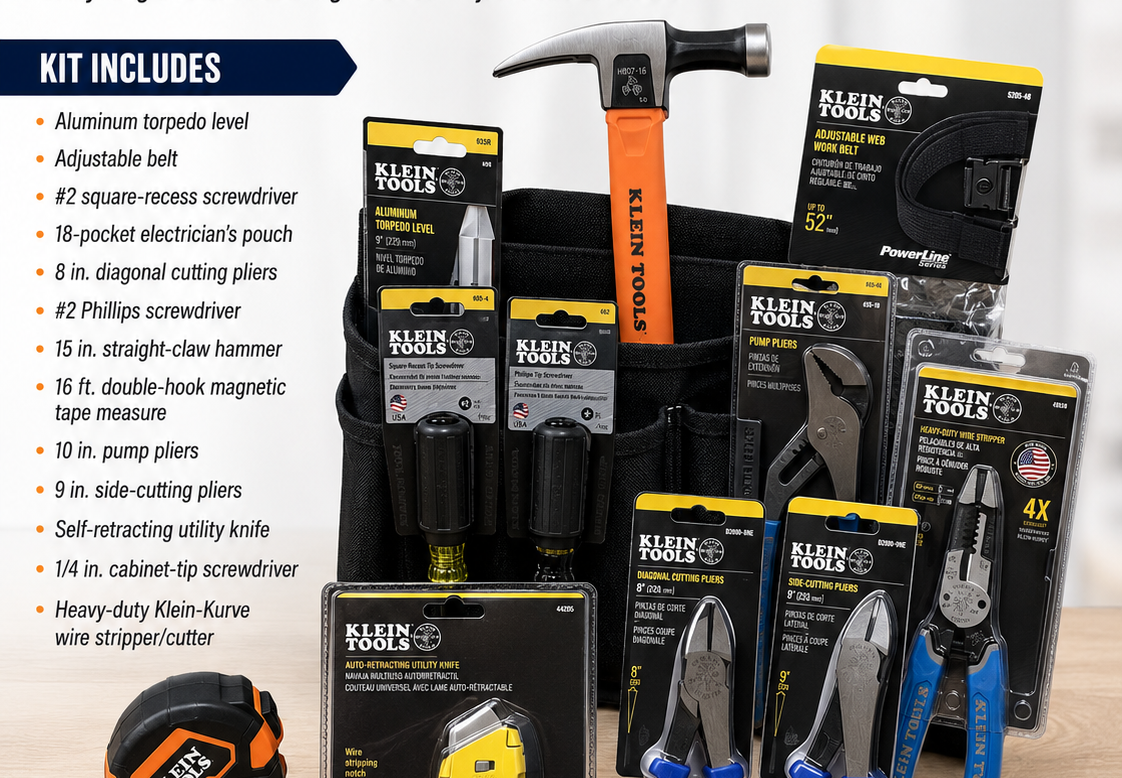
Each kit includes:
- Aluminum torpedo level
- Adjustable work belt
- #2 square-recess screwdriver
- 18-pocket electrician’s pouch
- 8-inch diagonal cutting pliers
- #2 Phillips screwdriver
- 15-inch straight-claw hammer
- 16-foot double-hook magnetic tape measure
- 10-inch pump pliers
- 9-inch side-cutting pliers
- Self-retracting utility knife
- 1/4-inch cabinet-tip screwdriver
- Heavy-duty Klein-Kurve wire stripper/cutter
The only additional item students will need is a calculator.
Together, these tools cover many of the basic tasks students will encounter while learning electrical installation, wiring methods, measurement, device installation, conduit work, troubleshooting, and general jobsite practices.
Professional Tools for Career Training
There is value in learning with the same type of equipment used by professionals in the field.
Good tools are not only more durable; they also help students develop proper work habits and become familiar with the equipment they are likely to use once they enter an apprenticeship, contractor environment, industrial facility, or maintenance department.
For students entering the skilled trades, that familiarity matters.
Electrical work requires precision, safety, craftsmanship, and attention to detail. Providing students with a solid set of tools from the beginning allows instructors to spend more time teaching those skills rather than working around inadequate equipment.
Supporting Career and Technical Education
Career and technical education continues to play an increasingly important role in developing the skilled workforce our region needs.
Electricians, electrical technicians, maintenance professionals, controls technicians, and other skilled tradespeople remain critical to manufacturing, construction, infrastructure, commercial facilities, and industrial operations throughout Western Pennsylvania and Eastern Ohio.
Programs like those offered by Lawrence County Career & Technical Center give students the opportunity to graduate with practical skills, hands-on experience, and a clearer pathway into a career.
For some students, that path may lead directly into an apprenticeship or electrical contractor. Others may continue into industrial maintenance, automation, manufacturing, engineering technology, or additional technical education.
Regardless of where they ultimately go, learning a skilled trade provides a foundation that can create opportunities for decades.
More Than an Order
For us, projects like this are a reminder that electrical distribution is about more than boxes, wire, conduit, fittings, and tools.
The materials and equipment we supply ultimately support the people doing the work.
In this case, they are helping students take some of their first steps into the electrical industry.
We appreciate the opportunity to work with Lawrence County Career & Technical Center and help provide its electrical students with the tools they need to learn, practice, and prepare for their future careers.
CAPO Supply is proud to support skilled trades education and the next generation of electricians who will help build, maintain, and power our communities.