Replacing outdated lighting with LED fixtures is an effective way to reduce electricity use, but lighting is only one part of a building’s electrical load.
In many homes, commercial properties and industrial facilities, larger savings can be found in heating and cooling equipment, motors, controls, plug loads, ventilation systems and equipment that continues running when it is not needed.
A practical energy-saving plan begins by identifying where electricity is being used, when equipment is operating and whether each load is properly controlled.
Start by Measuring Electrical Usage
Before replacing equipment, determine where the energy is going.
A building’s utility bills provide total consumption, but they do not show which systems are responsible. Submetering, circuit-level monitoring and energy-management systems can provide a more useful picture of how individual panels, equipment groups or operating areas consume power.
Monitoring can help identify:
- Equipment operating after business hours
- Unexpected increases in electrical demand
- Heating and cooling systems running simultaneously
- Motors operating continuously at full speed
- Excessive plug loads
- Refrigeration or mechanical equipment cycling improperly
- Differences between normal and abnormal operating conditions
Without measurement, energy upgrades are often based on assumptions. Even basic monitoring can help a facility prioritize improvements that offer the most useful return.
Improve HVAC Controls
Heating, ventilation and air-conditioning equipment is often one of the largest electrical loads in a building.
Energy can be wasted when thermostats are poorly located, schedules are outdated or equipment continues operating at full capacity while areas are unoccupied.
Useful HVAC control improvements include:
- Programmable or smart thermostats
- Occupancy-based scheduling
- Zone controls
- Building automation systems
- Temperature setback during unoccupied hours
- Demand-controlled ventilation
- Automatic shutdown of unnecessary exhaust systems
- Equipment lockouts that prevent simultaneous heating and cooling
The U.S. Department of Energy reports that successful implementation of high-performance building controls has demonstrated HVAC energy-use reductions of approximately 30% in commercial buildings. Actual results depend on the equipment, building and previous control strategy.
Controls are most effective when schedules are reviewed periodically. A properly programmed system can still waste energy if business hours, occupancy patterns or building usage have changed.
Use Variable-Frequency Drives on Suitable Motors
Many fans and pumps do not need to operate at full speed continuously.
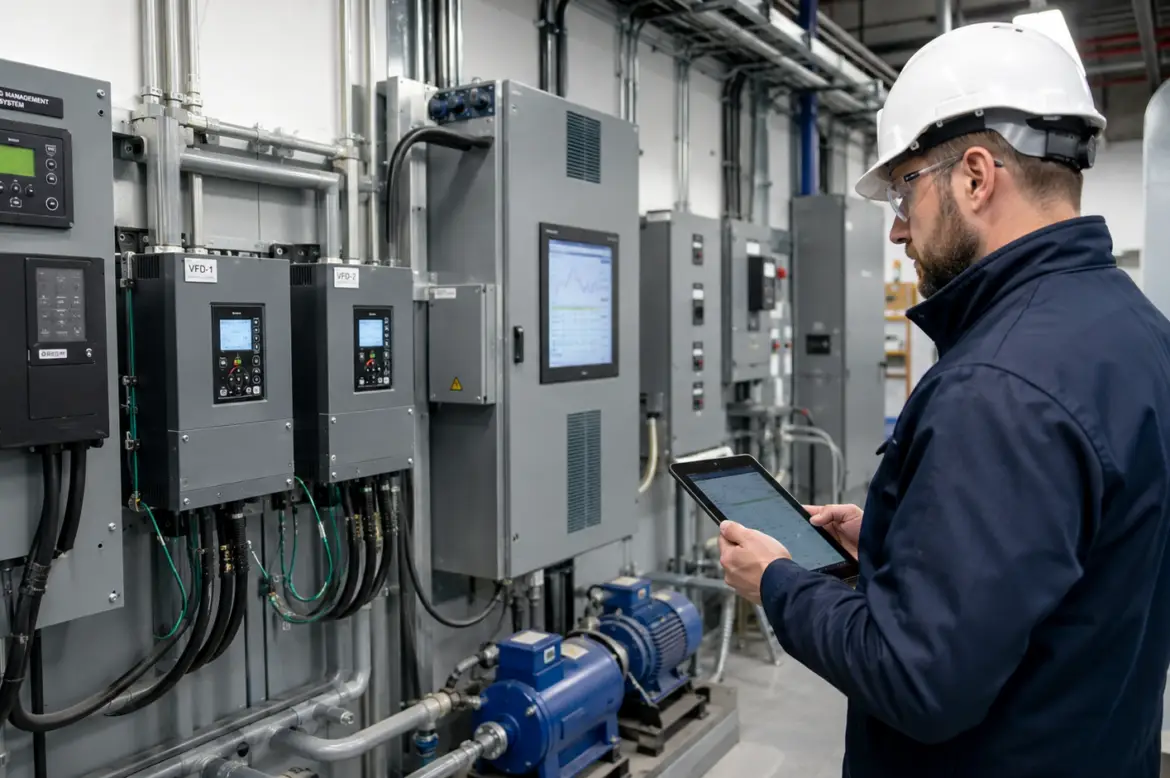
A variable-frequency drive, or VFD, adjusts motor speed to match actual system demand. Common applications include:
- Air-handling-unit fans
- Cooling-tower fans
- Exhaust systems
- Circulation pumps
- Process pumps
- Dust-collection systems
- Certain conveyors and production equipment
Reducing motor speed can produce substantial savings on variable-torque loads. Department of Energy guidance notes that, under the applicable fan and pump relationships, operating at 80% of full speed can require roughly 51% of full-speed power.
A VFD must be properly matched to the motor, load, enclosure and operating environment. Not every motor application is a good VFD candidate, so the expected duty cycle should be evaluated before installation.
Upgrade Aging Motors
Motor efficiency matters most when a motor operates frequently or for long periods.
An older motor may still run, but it can consume more electricity than a properly sized, modern high-efficiency replacement. Oversized motors can also operate inefficiently when the actual load is substantially below their rated capacity.
When replacing or evaluating motors, consider:
- Motor efficiency rating
- Actual operating load
- Daily runtime
- Number of starts
- Power quality
- Mechanical condition
- Belt tension and alignment
- Bearing condition
- Opportunities for speed control
- Whether the motor is properly sized
The Department of Energy recommends combining efficient equipment purchases with motor-system energy-management practices rather than evaluating the motor as an isolated component.
Control Plug Loads
Computers, monitors, printers, chargers, breakroom appliances, vending equipment and other plug-connected devices can continue drawing power long after a building is unoccupied.
These loads may appear small individually, but their combined use can be significant—especially in offices, schools, retail facilities and other buildings with large amounts of electronic equipment.
Practical controls include:
- Advanced power strips
- Controlled receptacles
- Occupancy-based receptacle controls
- Timer-controlled circuits
- Computer sleep settings
- Scheduled shutdown procedures
- Centralized controls for workstations
- Disconnecting unused chargers and equipment
- Replacing inefficient breakroom and office appliances
Department of Energy Better Buildings resources identify plug and process loads as a growing share of commercial-building energy use and recommend combining controls with operating policies and occupant engagement.
Install Occupancy and Vacancy Sensors
Occupancy sensors are commonly associated with lighting, but they can also help control other appropriate loads.
Depending on the application, sensors may be used with:
- Exhaust fans
- Ventilation systems
- Controlled receptacles
- Breakroom equipment
- Restroom equipment
- Supplemental heating or cooling devices
- Signage
- Selected process loads
A vacancy sensor requires a person to turn the load on manually but shuts it off automatically when the area is no longer occupied. This can prevent equipment from being activated unnecessarily while still providing automatic shutoff.
Loads that support safety, security, refrigeration, communications or continuous processes should not be placed on automatic controls without a proper system review.
Use Timers, Contactors and Control Panels
Some loads do not require advanced automation. A properly designed timer or control circuit may be enough.
Time clocks, programmable timers, contactors and relays can control:
- Exterior signs
- Parking-lot equipment
- Landscape systems
- Water heaters
- Circulation pumps
- Exhaust fans
- Snow-melting equipment
- Decorative lighting
- Equipment that follows a predictable schedule
Astronomical time clocks can adjust operation based on sunrise and sunset, reducing the need for seasonal manual changes.
The control equipment must be rated for the connected load. Large motors, heating equipment and other substantial loads may require a timer to operate a properly sized contactor rather than switching the load directly.
Reduce Electric Water-Heating Costs
Electric water heating can be a substantial load in homes, restaurants, salons, offices, shops and multifamily buildings.
Potential improvements include:
- Correcting excessive temperature settings
- Repairing leaking hot-water fixtures
- Insulating accessible hot-water piping
- Installing timer controls where appropriate
- Using occupancy or demand controls for circulation pumps
- Replacing aging electric tanks with more efficient equipment
- Evaluating heat-pump water heaters
- Separating unnecessary hot-water loads
A recirculation pump that runs continuously can waste both electricity and heat. In appropriate applications, timers, temperature controls or demand-based controls can reduce unnecessary operation.
Maintain Refrigeration and Cooling Equipment
Refrigerators, freezers, walk-in coolers and display cases can consume excessive energy when doors, seals, controls or heat-rejection components are not working properly.
Maintenance and control opportunities include:
- Cleaning condenser coils
- Repairing damaged door gaskets
- Confirming temperature settings
- Installing door-heater controls
- Using efficient evaporator-fan motors
- Adding fan-speed controls where suitable
- Repairing doors that do not close properly
- Reducing unnecessary door openings
- Replacing obsolete equipment
ENERGY STAR specifically identifies anti-sweat heater controls and variable-speed evaporator-fan motors as potential energy-saving measures for existing refrigeration equipment.
Maintain Electrical Connections and Distribution Equipment
Loose, corroded or overheated electrical connections do not represent an energy-efficiency strategy by themselves, but they can indicate system problems and create unnecessary resistance, heat and reliability concerns.
Preventive maintenance may include:
- Infrared inspections
- Examination of panel and switchgear connections
- Checking for unbalanced loads
- Confirming conductor and termination condition
- Cleaning electrical rooms
- Reviewing transformer loading
- Identifying overheated breakers or disconnects
- Verifying that equipment ventilation is unobstructed
Maintenance and testing should be performed by qualified personnel using appropriate safety procedures.
Evaluate Transformer Loading
Transformers have operating losses even when downstream demand is limited. Older or unnecessarily energized transformers may continue consuming energy during periods of low occupancy.
Facilities should review:
- Transformer age and efficiency
- Actual loading
- Whether multiple lightly loaded transformers are necessary
- Whether unused equipment remains energized
- Harmonic loads
- Ventilation and operating temperature
- Opportunities to replace obsolete units during renovations
Transformers should not be disconnected or consolidated without an electrical-engineering review of capacity, redundancy, fault current and system design.
Address Compressed-Air Waste
Compressed air is useful in industrial and service environments, but it is an inefficient way to deliver energy when systems leak or are used for tasks that could be performed by another method.
Energy-saving measures include:
- Repairing leaks
- Lowering system pressure where practical
- Isolating unused branches
- Shutting compressors down during unoccupied periods
- Maintaining filters and dryers
- Correcting inappropriate compressed-air uses
- Sequencing multiple compressors
- Using local blowers or electric tools where more suitable
Because compressors can operate in response to system leakage even when production equipment is idle, after-hours operation should be investigated.
Manage Peak Electrical Demand
Commercial electric bills may include charges based on the highest demand reached during a billing period, not only the total kilowatt-hours consumed.
A brief period when several large loads operate simultaneously can create a demand peak that affects the entire bill.
Demand-management strategies may include:
- Staggering equipment startup
- Scheduling EV charging
- Sequencing HVAC equipment
- Controlling electric heating loads
- Avoiding simultaneous operation of large process equipment
- Using demand controllers
- Applying energy storage where economically justified
The utility rate structure should be reviewed before investing in demand-management equipment. Reducing total consumption and reducing peak demand are related but separate objectives.
Plan Electric Vehicle Charging
EV charging can add a substantial new electrical load to a home or commercial facility.
Energy-conscious charging strategies include:
- Charging during off-peak utility periods
- Using scheduled charging
- Applying load-management systems
- Sharing available capacity among multiple chargers
- Avoiding unnecessary charging at maximum output
- Coordinating charging with building demand
- Selecting equipment that supports future expansion
Managed charging can help a property add EV capacity without allowing every charger to draw maximum current simultaneously.
Correct Equipment Schedules Before Replacing Equipment
One of the least expensive energy improvements is ensuring that equipment operates only when required.
Before purchasing new equipment, review the schedules for:
- HVAC systems
- Exhaust fans
- Water heaters
- Circulation pumps
- Exterior equipment
- Compressors
- Production machinery
- Refrigeration accessories
- Office equipment
- EV chargers
A high-efficiency device that runs unnecessarily may consume more energy than standard equipment operating under proper control.
Prioritize Improvements by Operating Hours and Load
The most visible electrical load is not always the most expensive one.
A useful way to prioritize potential projects is to consider:
- The equipment’s electrical demand
- How many hours it operates
- How much of that runtime is unnecessary
- Whether the load can be reduced or controlled
- The cost of the proposed improvement
- Maintenance and reliability benefits
- Available utility incentives
Equipment with high demand and long operating hours often provides the strongest opportunity. Low-cost controls may also produce attractive results when they eliminate unnecessary runtime.
Build an Energy Plan Around the Facility
There is no single electrical upgrade that works for every property. A warehouse, home, office, retail store and manufacturing facility will have very different energy profiles.
A practical plan may combine:
- Energy monitoring
- HVAC controls
- VFDs
- Efficient motors
- Occupancy controls
- Controlled receptacles
- Timers and contactors
- Managed EV charging
- Preventive maintenance
- Strategic equipment replacement
LED lighting remains valuable, but the strongest energy strategy examines the entire electrical system.
CAPO Supply can assist contractors and facility teams with electrical distribution equipment, controls, sensors, timers, contactors, VFDs, wiring products and other materials used in energy-efficiency upgrades.
Contact CAPO Supply to discuss the electrical products needed for your next energy-saving project.